Thursday, September 10, 2026 | user activity monitoring software
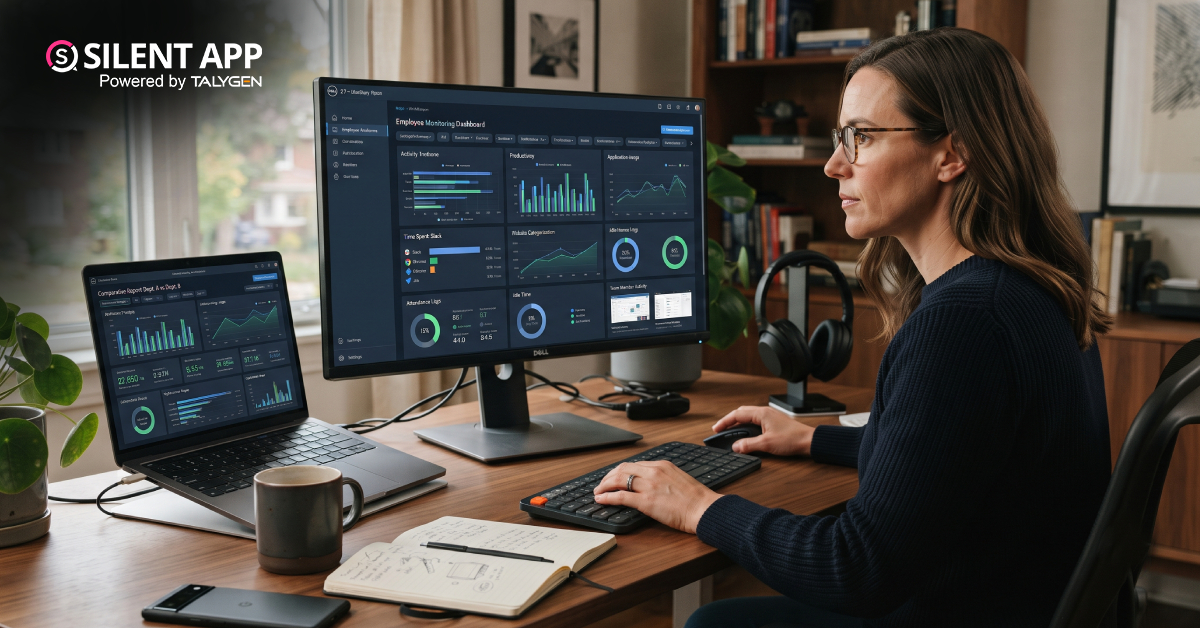
Employee monitoring has become an increasingly important consideration for businesses managing remote, hybrid, and distributed teams. Organizations need visibility into work activity, productivity patterns, attendance, application usage, and employee workflows while also maintaining an efficient and transparent approach to workforce management. As a complete Employee Monitoring Software, Silent App helps businesses gain deeper visibility into workforce activity through a centralized platform.
However, not every employee monitoring software provides the same level of functionality. Some solutions focus primarily on time tracking and screenshots, while others provide deeper activity monitoring, automated recording, application and website tracking, attendance information, and detailed reporting. This makes selecting the right platform an important technology decision.
Silent App vs. Time Doctor is particularly relevant because Time Doctor Classic is being retired, creating a natural opportunity for businesses using the legacy platform to reassess their employee monitoring requirements.
For organizations evaluating alternatives, the comparison should go beyond simply asking which platform records employee activity. Businesses should consider the depth of monitoring, reporting capabilities, automation, visibility, flexibility, pricing, and how effectively the solution fits into a broader workforce-management strategy.
Silent App approaches employee productivity and workforce management from a broader business-management perspective, combining time, attendance, productivity, project, employee, and operational capabilities within a unified platform.
Silent App supports discreet background monitoring without visible taskbar icons, pop-ups, or on-screen indicators. Time Doctor Classic operates more visibly with notifications. For businesses, discreet monitoring can provide continuous activity insights without interrupting workflows, while monitoring policies should remain transparent and compliant with workplace requirements.
Both platforms support screenshots, but Silent App also offers automated screen and video recording. This provides businesses with more detailed context than periodic screenshots alone and can be useful for understanding complete workflows.
Silent App tracks keystrokes and mouse activity, while Time Doctor Classic does not include this feature. These insights can help organizations understand computer activity, although they should be evaluated alongside project results, workload, and overall performance.
Silent App can detect mouse-jiggler and activity-simulation tools designed to create artificial activity. This feature is not available in Time Doctor Classic according to the supplied comparison, making it useful for businesses seeking more reliable activity data.
Silent App automatically tracks idle periods, while Time Doctor Classic offers a more limited approach. Idle data can help identify activity patterns, but businesses should consider meetings, reading, planning, and other tasks that may not involve keyboard or mouse activity.
Both solutions track website and application usage. This can help businesses understand digital workflows, identify productivity barriers, and discover opportunities to improve inefficient processes.
Silent App automatically captures attendance through login and logout activity. Time Doctor Classic relies more on manual entry and approval. Automated tracking in Employee Monitoring Software can reduce administrative work, particularly for remote and distributed teams.
Silent App supports multi-monitor capture, while Time Doctor Classic does not according to the comparison. This can benefit employees who use multiple screens for design, development, research, finance, and other complex workflows.
Silent App can cache activity data during internet interruptions and synchronize it once connectivity returns. Time Doctor Classic does not offer this capability according to the supplied comparison, making offline support an important consideration for remote teams.
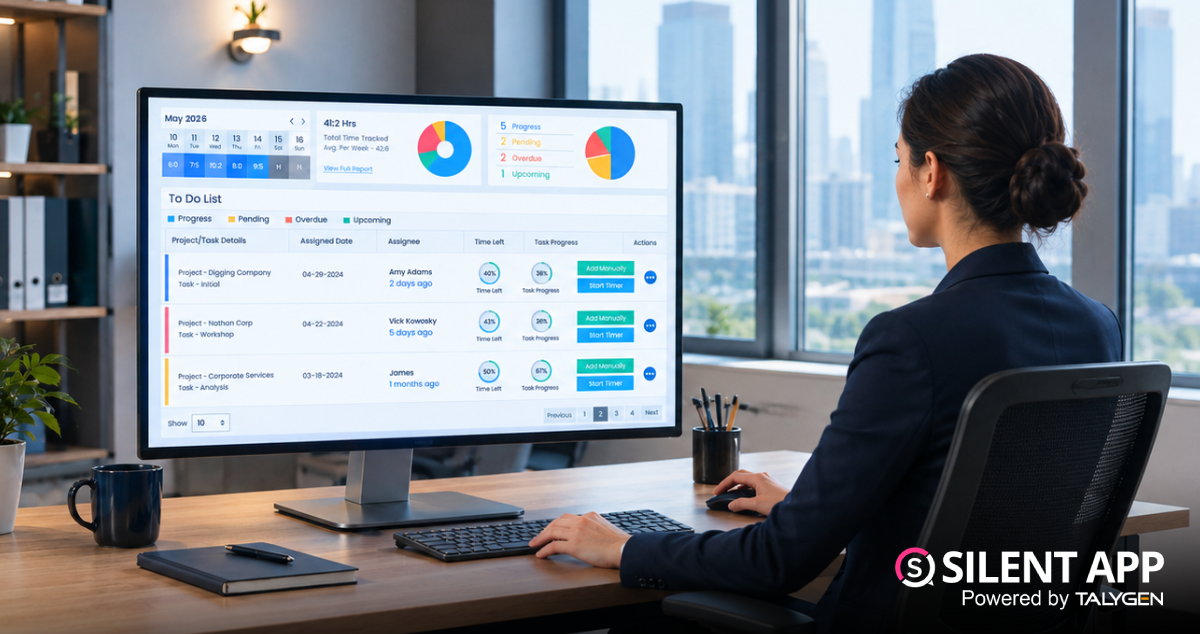
Both platforms offer reporting capabilities. Businesses can use reports to review attendance, idle time, application usage, activity patterns, and productivity trends. The real value lies in using these insights to improve workflows, balance workloads, and support better management decisions.
Pricing is an important consideration when businesses evaluate Employee Monitoring Software. According to the supplied pricing information, Silent App is priced at $5.10 per monitored user per month when billed annually, based on a $5.99 monthly list price and an active 15% annual-billing discount.
A month-to-month option is also available at a somewhat higher rate. Silent App also provides a 7-day free trial without requiring a credit card, with the ability to cancel at any time.
Time Doctor offers multiple plans. Its Basic plan starts at $6.67 per user/month when billed annually or $8 month-to-month. The Standard plan costs $11.67 annually or $14 month-to-month, while the Premium plan costs $16.70 annually or $20 month-to-month. Enterprise pricing is customized based on business requirements.
Time Doctor also provides a two-week free trial with access to Premium features and no credit card required. Optional features and integrations may involve additional charges.
For businesses comparing the two solutions, price should be considered alongside features, monitoring capabilities, reporting, and scalability. The right choice ultimately depends on the level of workforce visibility and management functionality an organization requires.
The retirement of Time Doctor Classic provides businesses with more than a reason to find a replacement. It creates an opportunity to reconsider what they actually need from employee monitoring and workforce-management technology.
The Silent App vs. Time Doctor comparison demonstrates that employee monitoring software can differ significantly in areas such as background operation, recording, activity logging, idle-time tracking, attendance, multi-monitor support, offline functionality, and reporting.
For organizations seeking deeper monitoring capabilities, Silent App offers several features that extend beyond the functionality outlined for Time Doctor Classic.
At the same time, businesses should think beyond monitoring alone. The modern workforce requires an integrated approach that connects employee activity with time management, projects, resources, workflows, and business outcomes.
If you’re evaluating Employee Monitoring Software for your remote, hybrid, or distributed workforce, Silent App provides a centralized solution designed to deliver deeper visibility, productivity insights, and workforce-management capabilities.
 2026
Oct
2026
Oct
Silent App Guide: A Complete Guide to Time Tracking, Productivity Monitoring, and Employee Insights
Friday, October 23, 2026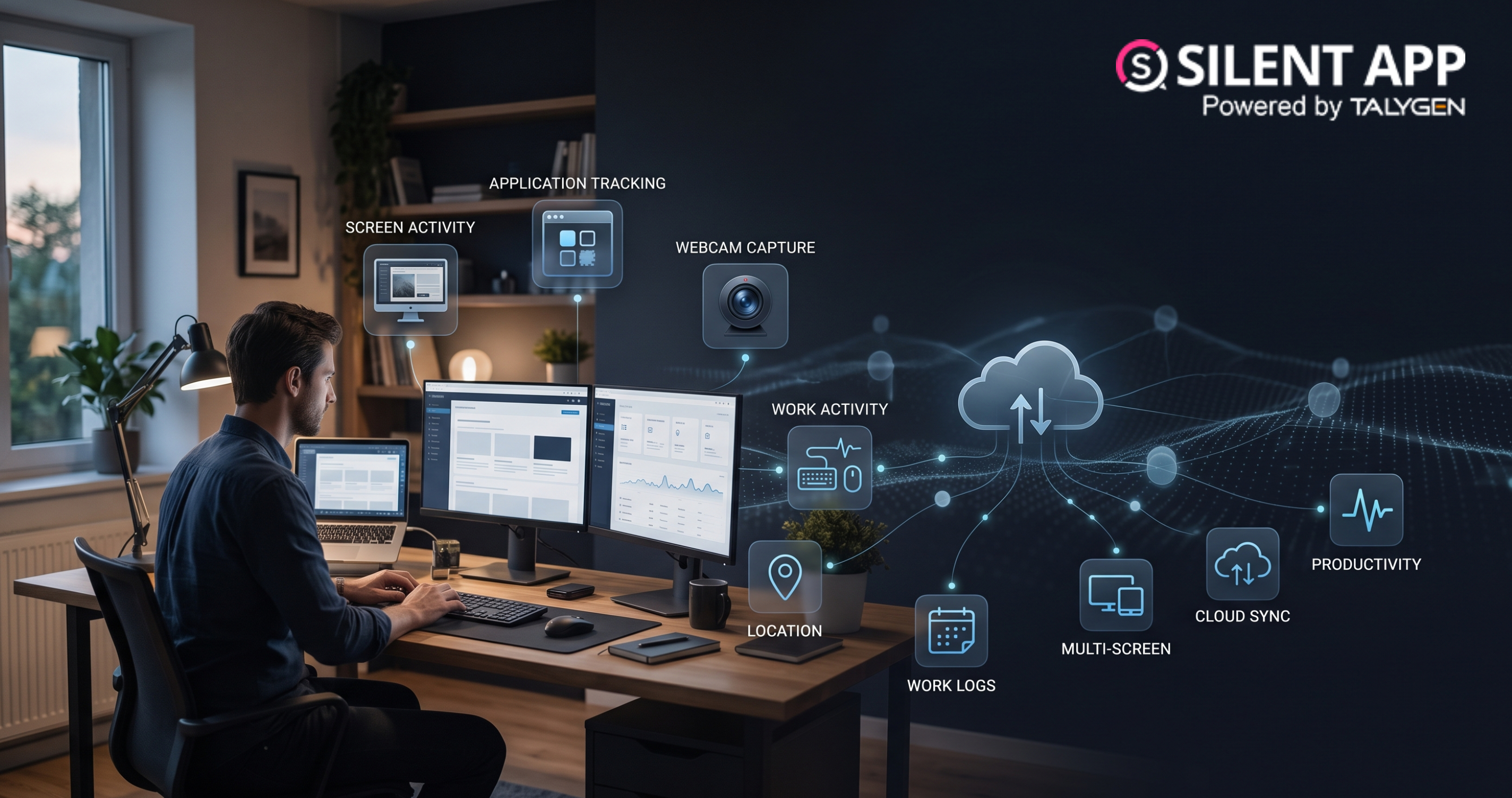
Remote Work Monitoring Software: Managing Distributed Teams with Silent App
Wednesday, October 07, 2026
Silent App vs Worktivity: Comparing Employee Monitoring Features for Modern Businesses
Thursday, October 01, 2026 Sep

Dynamic Reporting in Silent App Helping Businesses Turn Workforce Data into Useful Insights
Tuesday, September 29, 2026
Silent Monitoring Application Comparison: How Silent App Compares with Other Tools
Friday, September 25, 2026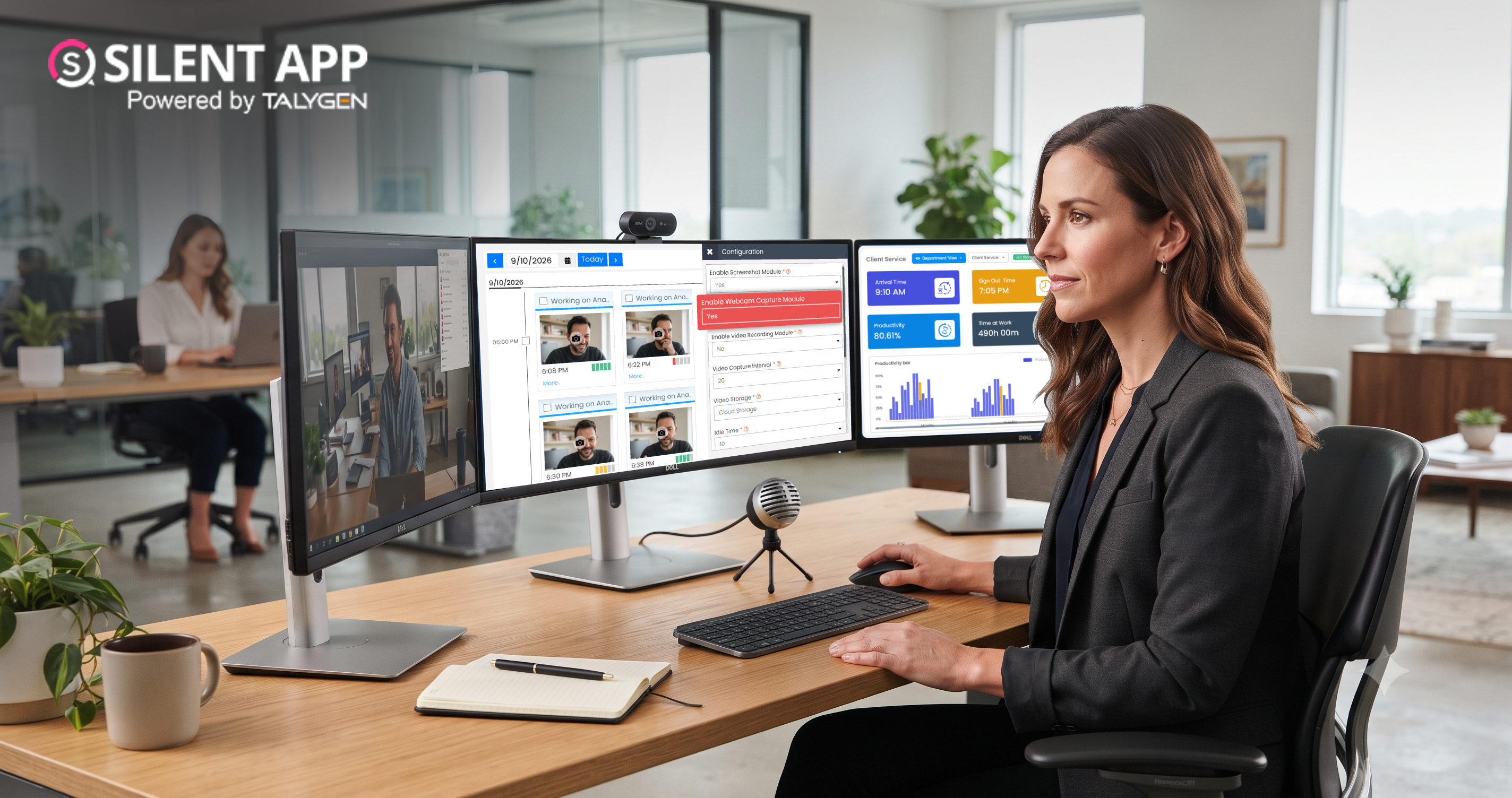
How Silent App Helps Businesses With Audio and Video Surveillance
Tuesday, September 22, 2026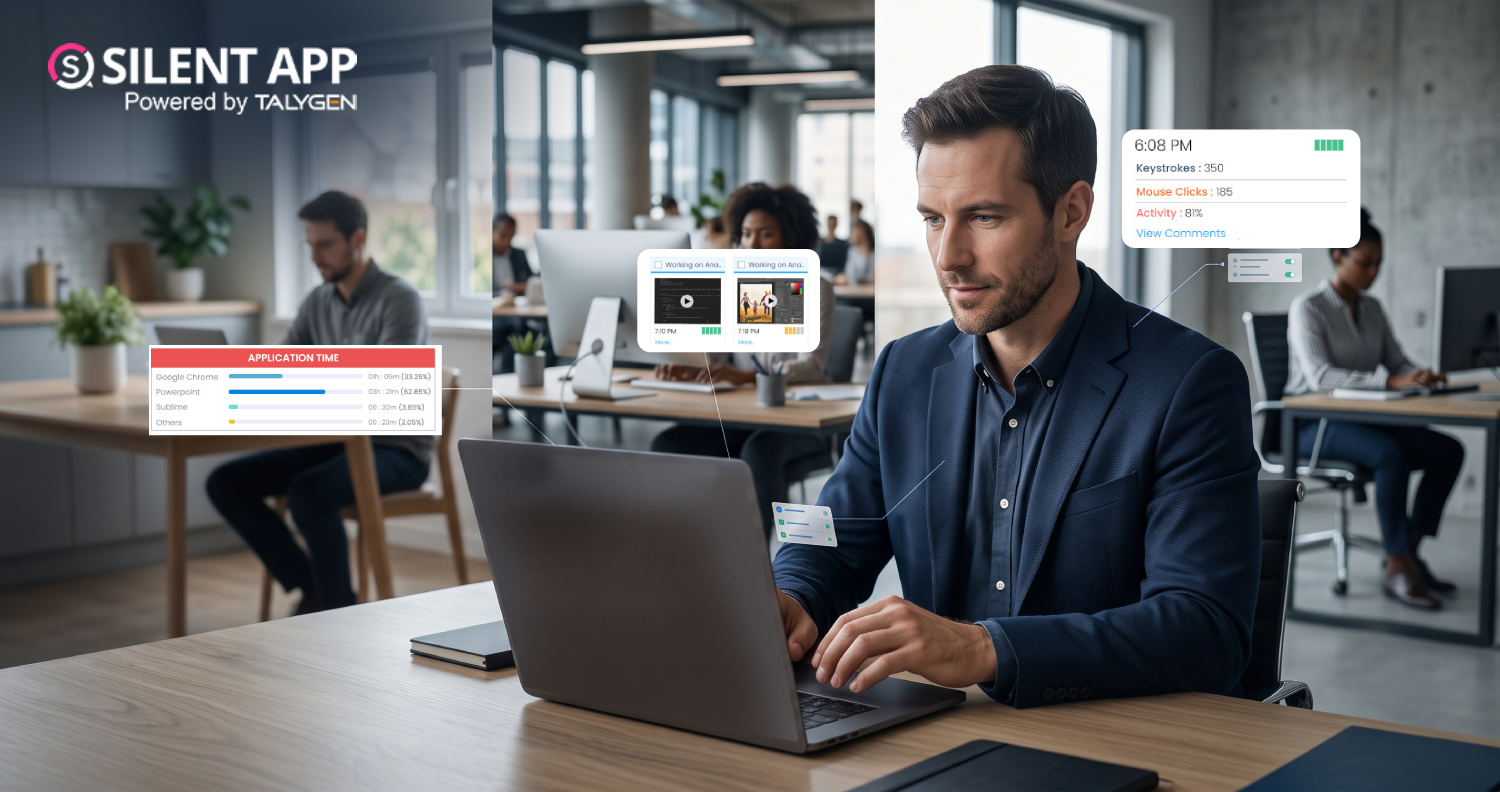
Silent App: Feature-Based Employee Monitoring for Modern Businesses
Friday, September 18, 2026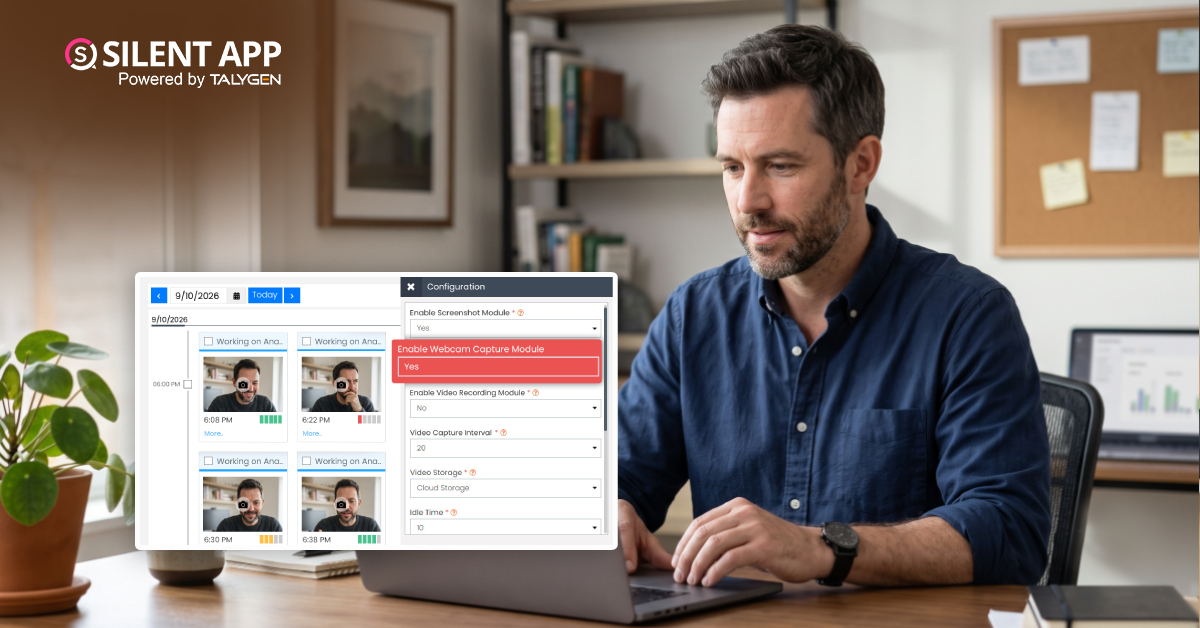
Webcam Capture in Employee Monitoring: How Silent App Helps Businesses Manage Remote Teams
Monday, September 14, 2026Silent App vs. Time Doctor Classic: Comparing Features, Monitoring & Pricing
Thursday, September 10, 2026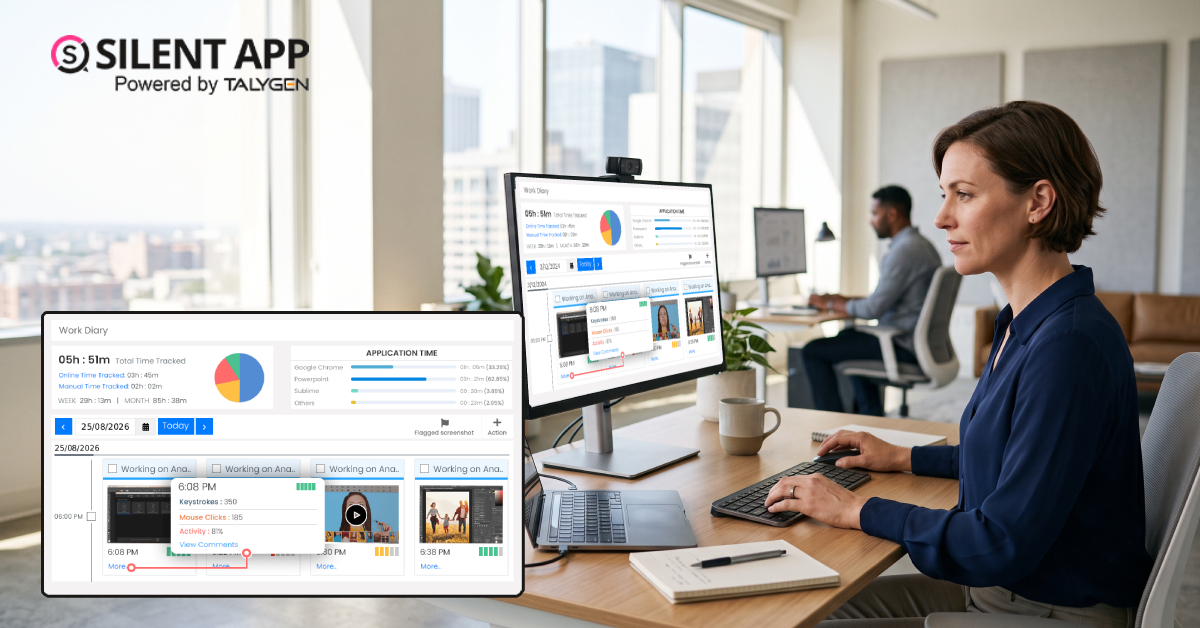
Why SilentApp Is the Employee Monitoring App Every Modern Business Needs
Tuesday, September 08, 2026 2024
Sep
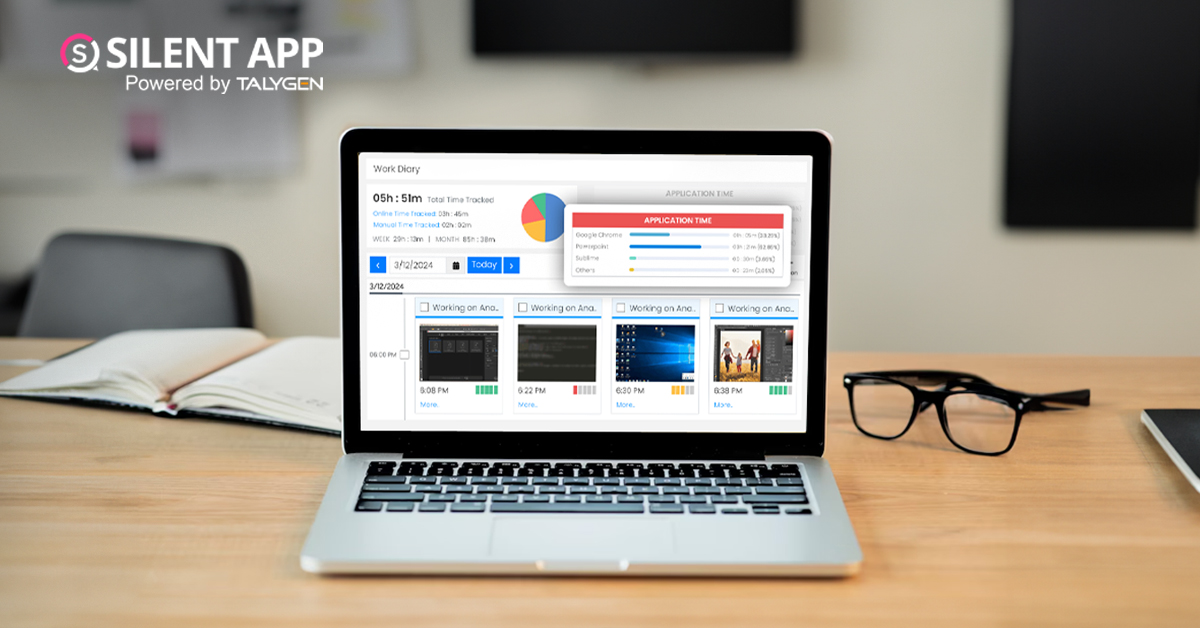
Why You Might Want Hidden User Activity Monitoring Software
Friday, September 20, 2024
Top Trends for Remote Work Management in 2024
Friday, September 20, 2024
6 Expert Ways to Balance Privacy & Safety in Remote Work with Silent Monitoring
Friday, September 20, 2024
How to Enhance Workforce Monitoring with the Silent App?
Thursday, September 19, 2024
Employee Moonlighting: How Does Stealth Mode Monitoring Software Prevent It?
Thursday, September 19, 2024
How To Monitor My Employees Without Letting Them Know?
Thursday, September 19, 2024
How Do Employers Monitor Employees' Internet Usage in Stealth Mode?
Thursday, September 19, 2024 Jul

How Does Silent App Help Small Businesses Get More ROI?
Wednesday, July 31, 2024
Silent Activity Tracking Software: The Quiet Helper for Enhancing Work and Safety
Wednesday, July 17, 2024
Stealth Mode Monitoring: Benefits for Remote and Office Work Environments
Tuesday, July 09, 2024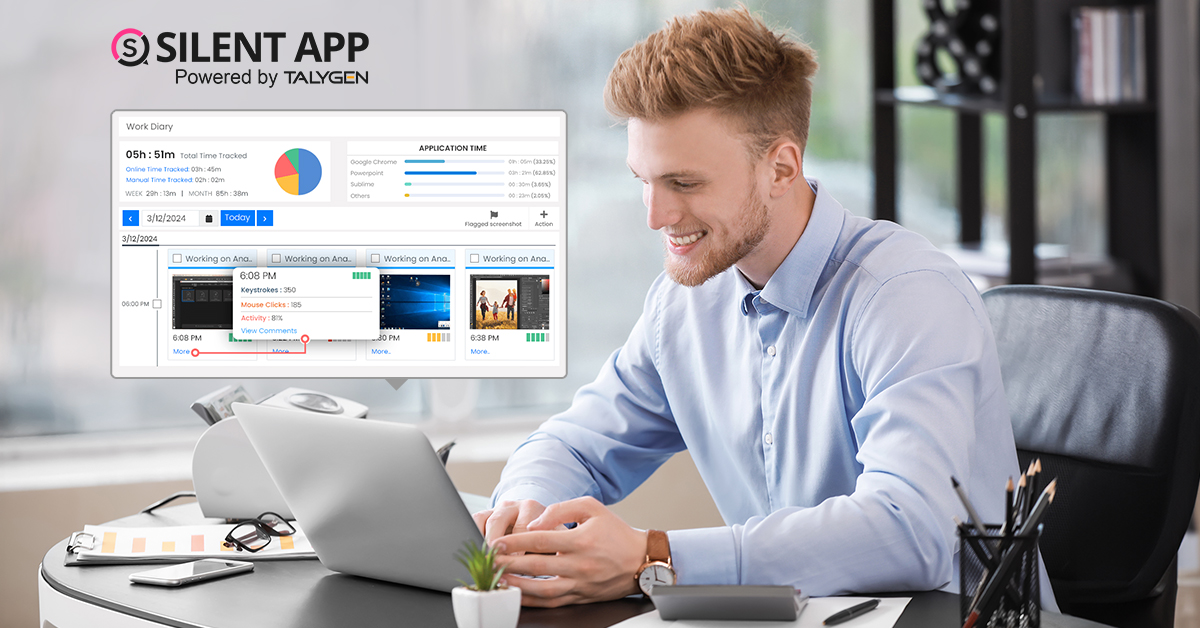
Silent App: Helps Limiting the Impact of Employee Disengagement
Friday, July 05, 2024 Jun

Prevent Quiet-Quitting with silent app
Monday, June 24, 2024
Debunking 8 User Activity Monitoring Myths & Misconceptions
Friday, June 21, 2024
7 Features to Look for in Your Next User Activity Monitoring Software
Friday, June 21, 2024
10 Tips for Choosing the Best Silent Activity Monitoring Software
Wednesday, June 19, 2024